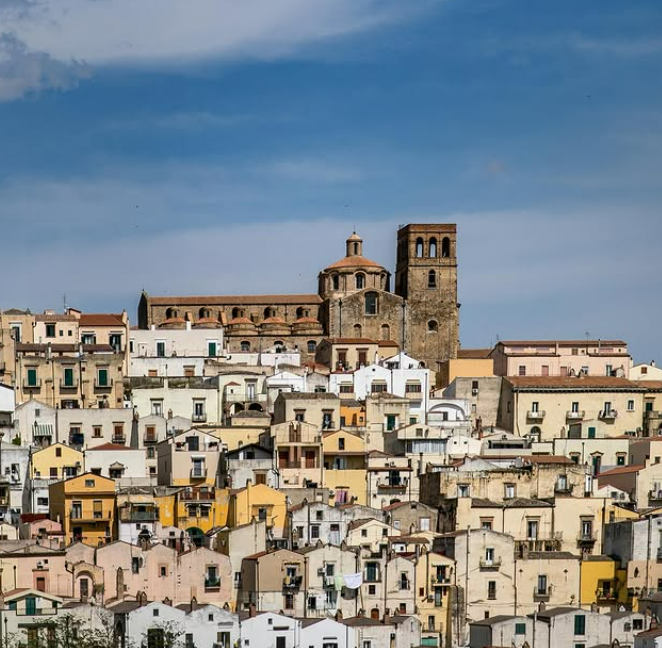
Ferrandina is another of the Basilicatan towns with roots in Greece, dating back to Magna Grecia, approximately 1000 BC. The original Greek name was Troilia, which was built in memory of the ancient Greek city of Troia, located in Asia Minor. The name change to Ferrandina by King Frederick of Naples, was to honour his father. In that time, the Kingdom of Naples valued Ferrandina as an agricultural base in the production of wool. In 1546, the Dominicans established the monastery of Saint Dominic.
In the 1800’s there was a nationalist Italian movement, as what we now know as Italy was broken into pieces, between foreign monarchies, and independent states. Ferrandina took part in the 1820 and 1860 rebellions, which led to the formation of Italy as an independent nation in 1861. However, there was a brigand movement in the south, against the newfound state; in March 1862, the local brigand leader Carmine Crocco confronted and destroyed here company of Italian troops in Ferrandina.
Ferrandina is part of a broader exploration of the Basilicata region. Focus on authentic, slow travel in this area. Visiting Ferrandina can easily be tied into a two-stage day-trip, wherein a morning visit to sights is tied into a local slow lunch.
I emphasize the importance of having a car to explore Basilicata, as public transport and taxi service can be sparse; though retaining a driver is a prevalent option.
Piazza De Gasperi should serve as your starting point for the visit. You might get lucky and find a parking spot, but if not, drop off your passengers and go back down to Parcheggio Santa Lucia immediately east of the Piazza; be aware that it’s a couple of flights of stairs back up. Invariably, it’s a common situation to find parking at a lower rate than in the central part of the Basilicatan “hill” towns.
Considering its size, Ferrandina has some good history and architecture to explore. Make your way up the Town by foot along Corso Vittorio Emanuele II to Piazza del Plebiscito, the town’s social hub and main square.

One can envision how rich this town was by the number and ornateness of its religious institutions. Santa Maria Della Croce, dating back to 1492, anchors the south end of the square. Though simplistic on the outside, inside you will find an ornate, well-preserved church. Of note are the Byzantine dome, the 16th century wooden doors and carvings, and sculptures by Altobello Persio of the Virgin Mother and child, and of King Ferdinand and his wife Isabella.
On the north side of Piazza del Plebiscito is the Monastery of Santa Chiara and the Cloister of San Domenico; both significant landmarks.

Further afield, and just to the west outside of town, the remains of Uggiano Castle are of interest to visitors looking for a good hike. There is very little left of the structure, but it is easy to imagine that people who lived in medieval Basilicata had something to be scared about. The structure was built on a promontory right to the edge of steep hills on every side. An earthquake in 1456 marked the end of this original settlement.

A major theme of Frankly Italy is the gastronomic experience; in this case I point to the “Liquid Gold” of the region. Ferrandina is world-renowned for the Majatica (My-attic-ah) olive oil and its unique baked (toasted) olives. I always recommend to stop at local producers or workshops to taste the oil and some of the town’s artisanal liqueurs. In addition, pair your visit with local specialties like peperoni cruschi (crunchy peppers) and caciocavallo cheese for the makings of a truly Basilicatan tasting experience.
In Ferrandina, tasting Majatica Olive Oil isn’t just about flavor—it’s about discovering the product that gives the town its soul, making your experience authentic. Fernandinho is the agricultural heart of the region’s “Liquid Gold”, and these are my recommendations on how to experience it.
1. If you want to try the Top Experience, Azienda Agricola Bitonti is what you need. Bitonti is my go-to for the full “farm-to-table” experience. They are one of the most prestigious organic producers in the area with over 200 hectares of century-old Majatica trees. Authentic and educational, they offer guided tours of the groves and the mill. They specialize in organic, monovarietal dishes. The menu typically features homemade pasta, like ferricelli, served with simple, seasonal ingredients and, of course, their world-class olive oil. You’ll taste their monovarietal organic EVOO, which is famous for its sweet, almond notes and herbaceous finish. My sure-fire tasting is to pair it with the local bread see how the oil “opens up.” Bitonti is a prime example of “Multifunctional Agriculture,” blending tourism with traditional farming and preserving the cultural heritage of Ferrandina. If you want the most comprehensive “farm-to-table” experience, They are one of the most prestigious organic producers in the area with over 200 hectares of century-old Majatica trees.

2. For a more casual but highly flavorful stop within the town center, Galtieri Liquori offers a very authentic and immersive experience. I consider it an essential stop if you want to try the Ultimate “Aperitivo”. This traditional workshop, alongside the artisanal liqueurs, serves a generous tasting board of Ferrandina’s most famous products, like fresh bread drenched in the Majatica oil, regional cheeses, cured meats, and the iconic “Infornate” (baked) olives. You can sample their artisanal liqueurs alongside the bread and Infornate olives, experiencing the flavors in a hands-on, immersive way. This is the best place to try the Majatica olive in its solid form—toasted in the oven with salt, which creates a rich, savory snack that I consider a “must-try.” Don’t leave without a bag of the “baked” olives. They are unique to Ferrandina and represent the town’s culinary identity.
3. Located slightly outside the main hub but deeply tied to the Ferrandina olive tradition, the Frantoio Oleario Valluzzi (brand name La Majatica) is a Slow Food presidium consistently awarded “3 Leaves” by Gambero Rosso (the highest rating for Italian oils), making it a top choice for anyone wanting a serious, authentic Majatica olive oil experience. While not focused on prepared dishes, Valluzzi highlights the olive harvest itself, showing how the Majatica cultivar defines the flavors of the region. In the late fall, enjoy a sensory journey through oils from different harvests—from early harvest (intense and spicy) to late harvest (sweet and buttery).
4. While there are fewer “destination” restaurants in the town itself compared to Matera, local Pizzeria and Trattoria options include Pizzeria La Terrazza, a local go-to for a classic evening. It offers views overlooking the valley and reliable, thin-crust Italian pizza. I also recommend Pasticceria Sospiri not for a meal, but to discover the town’s sweet tradition. Be sure to try the Sospiri (delicate, cream-filled sponge cakes), which have a centuries-old history in Ferrandina.
For a memorable full day-trip around the province, I would combine Ferrandina with nearby “hidden gems” like Pisticci, Craco, or Miglionico. I always use nearby Pisticci as my home base because of my Hotel Torre Fiore being there. Since Ferrandina is only a 20-minute drive away, here’s the schedule I typically recommend.
To start the day, explore the whitewashed town of Pisticci in the morning. Then, on the afternoon, visit Ferrandina for a walk through the historic center and an olive oil tasting. Then, during the evening, you can either head back to your hotel, or head to L’Incontro restaurant (in Pisticci) for authentic Lucanian dishes like Peperoni Cruschi (crunchy fried peppers) and hearty meat mains. If you let the proprietor Beniamino loose, he will serve you a wide-range of delicious local appetizer flavours, that will likely fill you up without ordering an entree; that’s what I do.
You might want to fit in a stop (on your way to or from Ferrandina) to the Museo Essenza Lucano (the immersive museum of Amaro Lucano), which I highly recommend for a cocktail at the end of the day (see earlier blog)
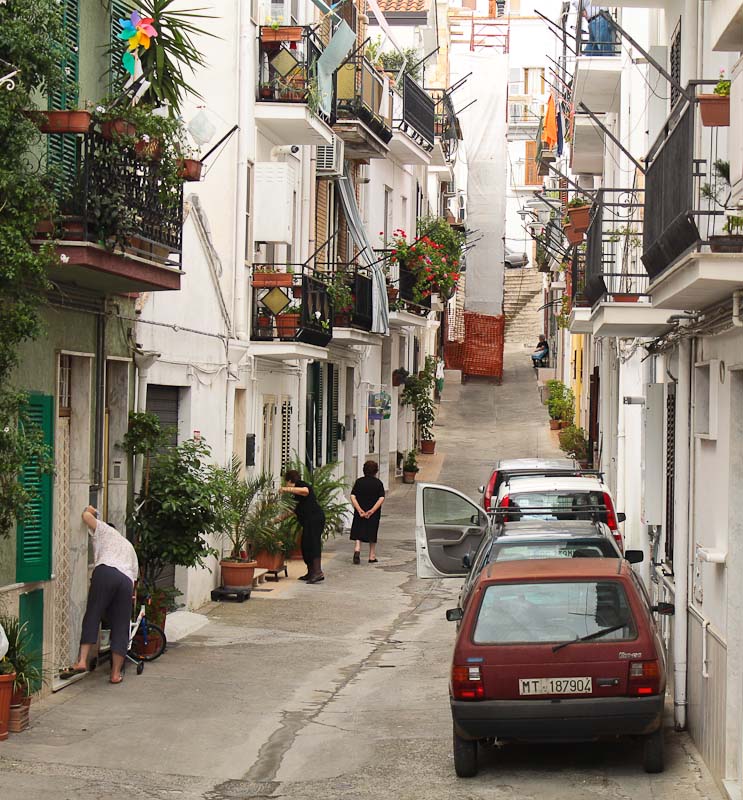
Spring and Autumn are the best times for a visit. The weather is comfortable for walking the steep alleys, and you avoid the heat of the Basento Valley in July and August. If you visit in late October or November, you can see the harvest in action. The town comes alive with the scent of freshly pressed olives during this time. As mentioned before, park outside the very center and walk in; the streets near the tasting rooms are incredibly narrow.
Make sure to check opening times, as some workshops and shops are seasonal or have limited hours. Finally, as mentioned before, if you see “Olive Infornate di Ferrandina” on a menu as an appetizer, order them. They are unique to this specific town.



Leave a Reply